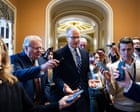
Title: Senate to Consider Controversial Voter ID Bill Amidst High-Stakes Illinois Senate Race
In a significant political move, the U.S. Senate is gearing up to debate a controversial voter ID bill, which has sparked fierce opposition from Democrats. This legislation is seen as a crucial step in the Republican agenda, particularly in the wake of former President Donald Trump’s declaration that he will refuse to endorse any new legislation until the passage of the Save America Act, a bill aimed at tightening voting regulations. The immediate significance of this event underscores the ongoing partisan divide over voting rights in the United States.
The voter ID bill aims to impose stricter identification requirements for voters, a measure proponents argue will enhance election integrity. However, critics contend that such legislation disproportionately affects marginalized communities, effectively disenfranchising eligible voters. As the Senate prepares to take up the bill, the stakes are further amplified by the concurrent Illinois Senate race, where voters will soon choose from a crowded field of Democratic candidates competing to fill the seat vacated by longtime Senator Dick Durbin.
The Illinois primary is not merely a local affair; it serves as a microcosm of national political dynamics. With Durbin's retirement, the race has attracted attention and funding from various outside groups, including significant contributions from the American Israel Public Affairs Committee (AIPAC). The influx of cash highlights the increasing role of money in politics, as candidates vie for voter support in a highly competitive environment. The outcome in Illinois could have ripple effects, influencing the Senate's balance of power and shaping the legislative agenda around voting rights.
As the Senate considers the voter ID bill, the implications are far-reaching. The timing is critical, as the bill's passage could embolden further attempts to restrict voting access nationwide, especially in Republican-led states. This shift in voter legislation could ignite widespread protests and mobilization efforts among advocacy groups, pushing for broader voting rights protections. Understanding the nuances of this debate is essential for voters, as the implications of the bill extend beyond state lines, potentially affecting elections across the country.
Experts suggest that the current political climate reflects a broader trend of increasing polarization around voting rights. Comparisons can be drawn to similar legislative battles in states like Georgia and Texas, where voter suppression laws have been enacted under the guise of election security. This growing trend raises questions about the future of democracy in the U.S. and the lengths to which parties will go to secure electoral advantages.
Key Takeaways:
- The Senate is preparing to debate a voter ID bill, which aims to impose stricter voting requirements.
- This legislation is part of a broader Republican agenda, influenced by Trump's insistence on the Save America Act.
- The Illinois Senate race is drawing significant financial support from outside groups, indicating the high stakes involved.
- Voter ID laws could lead to increased voter suppression, particularly impacting marginalized communities.
- The outcome of this legislation may set a precedent for similar laws across the country, influencing future elections.
In the next 24 hours, watch for reactions from advocacy groups and potential mobilization efforts aimed at opposing the voter ID bill, as well as updates on the Illinois primary that could further shape the political landscape.
Original source: Guardian World
How this was produced: AI-assisted synthesis from cited source, filtered for duplication and low-value rewrites by TxtFeed quality rules.





Comments
No comments yet. Be the first to share your thoughts.