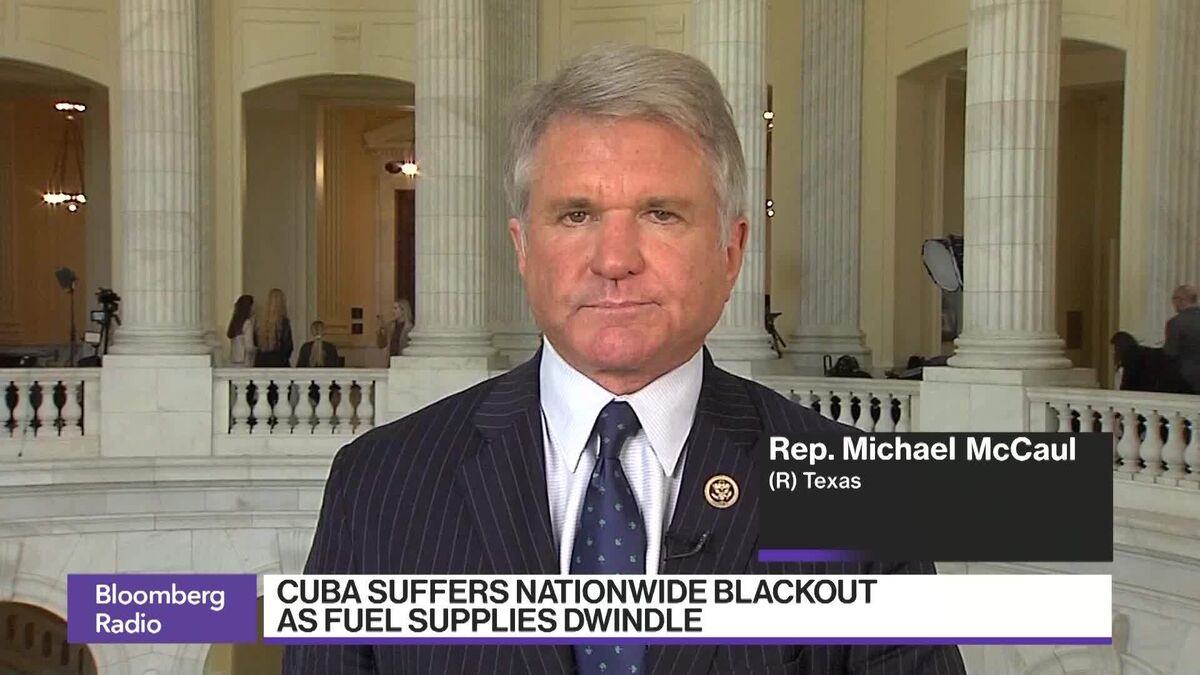
Title: Russia's Role in Iranian Targeting of U.S. Assets Raises Concerns, Says Rep. McCaul
In a significant revelation, Representative Michael McCaul has articulated his concerns regarding the Biden administration's decision to ease certain sanctions on Russian oil. During an appearance on Bloomberg's Balance of Power, McCaul emphasized that Russia is not merely an adversary but an active collaborator with Iran, reportedly assisting Tehran in identifying and targeting U.S. assets. This statement underscores the potential risks associated with U.S.-Russia relations amidst ongoing geopolitical tensions.
McCaul's commentary comes at a time when the complexities of U.S. foreign policy are under intense scrutiny. The easing of sanctions, as part of a broader strategy to stabilize global oil markets, has raised alarms among many lawmakers who fear that such moves could empower hostile nations. Specifically, the Texas Republican pointed to the troubling alliance between Russia and Iran, suggesting that any benefits from reduced oil prices may be overshadowed by increased threats to American interests in the Middle East.
The implications of this alliance are profound. As Russia continues to provide intelligence support to Iran, the potential for increased attacks on U.S. installations and personnel rises significantly. McCaul's assertions highlight a critical juncture in U.S. foreign policy, where economic decisions may inadvertently bolster adversaries. The backdrop of ongoing conflicts in Ukraine and the Middle East complicates these dynamics, requiring a careful reevaluation of strategies to manage adversarial relationships without compromising national security.
This development is particularly pertinent given that the U.S. has historically viewed both Russia and Iran as significant threats. The collaboration between the two nations could signal a shift in power dynamics, potentially emboldening Iran's regional ambitions and complicating U.S. efforts to maintain stability. As legislators debate the implications of lifting sanctions, the conversation is likely to intensify, with national security implications at the forefront.
Experts suggest that this situation may serve as a catalyst for a broader reassessment of U.S. sanctions policy. With rising concerns over the efficacy of sanctions in curbing adversarial behavior, lawmakers may push for a more robust approach that prioritizes national security over short-term economic gains. Observers are keenly watching how this debate unfolds in the coming days, particularly as it relates to U.S. military presence in the region.
In summary, McCaul's remarks serve as a clarion call for vigilance regarding the evolving relationship between Russia and Iran. As the U.S. navigates a complex geopolitical landscape, the consequences of these alliances could reverberate well beyond oil prices, impacting national security and foreign policy for years to come.
Key Takeaways:
- McCaul argues against easing sanctions, citing Russia's support for Iranian targeting of U.S. assets.
- The U.S. may face heightened risks to personnel and installations due to this alliance.
- Watch for legislative debates on sanctions policy in the next 24 hours.
- Readers should be aware of how geopolitical events can influence market stability and security.
- This situation reflects a broader trend of adversarial nations collaborating against U.S. interests.
Original source: Bloomberg
How this was produced: AI-assisted synthesis from cited source, filtered for duplication and low-value rewrites by TxtFeed quality rules.




Comments
No comments yet. Be the first to share your thoughts.