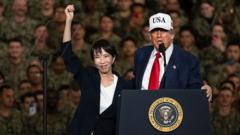
Japan PM to Hold 'Difficult' Talks with Trump as Iran Conflict Looms Large
In a critical diplomatic moment, Japanese Prime Minister Fumio Kishida is set to engage in challenging discussions with U.S. President Donald Trump, primarily focused on the escalating tensions in the Strait of Hormuz. This meeting comes on the heels of Trump's recent public admonition of Japan, accusing it of failing to meet his expectations for support in this strategically vital waterway, which is essential for global oil shipping. The outcome of these talks could significantly influence Japan's foreign policy direction and its role in international security.
The backdrop to this meeting is the heightened anxiety surrounding the Strait of Hormuz, where a significant portion of the world's oil supply transits. With Iran's military posture becoming increasingly aggressive, the U.S. has sought partnerships with allies like Japan to ensure the safety of maritime routes. Japan, heavily reliant on energy imports, has historically maintained a cautious approach to military engagement, making this meeting all the more pivotal in shaping Japan's response to U.S. calls for greater involvement.
As these discussions unfold, the stakes are high for Japan, which must balance its longstanding pacifist constitution against the pressures of a more assertive U.S. foreign policy. Kishida’s government is under scrutiny not only for its international alliances but also for its domestic implications. The Japanese public remains largely pacifist, and any shift towards a more militarized foreign policy could provoke backlash at home, complicating Kishida's agenda.
The timing of this meeting is crucial. With the U.S. election season approaching and Trump's foreign policy decisions under the microscope, the Japanese Prime Minister's ability to navigate these talks could either bolster or strain U.S.-Japan relations. Should Kishida agree to provide more military support in the region, it may set a precedent for Japan's future engagements and redefine its security posture.
Experts suggest that the discussions may also touch on broader geopolitical concerns, including the implications for China’s expanding influence in the region. Japan's strategic choices will not only affect its relationship with the U.S. but could also alter the dynamics of power in East Asia, particularly in relation to North Korea and its ongoing missile tests.
In summary, the meeting between Kishida and Trump represents a pivotal moment in international diplomacy, with potential ramifications that extend far beyond the Strait of Hormuz. Observers will be keenly watching how Japan positions itself in response to U.S. pressures, as it could herald a new chapter in its foreign policy.
Key Takeaways:
- Japan's PM Kishida is meeting Trump amid heightened tensions in the Strait of Hormuz.
- Trump has criticized Japan for not supporting U.S. military efforts in the region.
- Watch for Kishida's responses to U.S. demands in the next 24 hours.
- The outcome could influence Japan's military engagement policies and public sentiment.
- This reflects a broader trend of shifting alliances and security strategies in East Asia.
Original source: BBC World
How this was produced: AI-assisted synthesis from cited source, filtered for duplication and low-value rewrites by TxtFeed quality rules.





Comments
No comments yet. Be the first to share your thoughts.