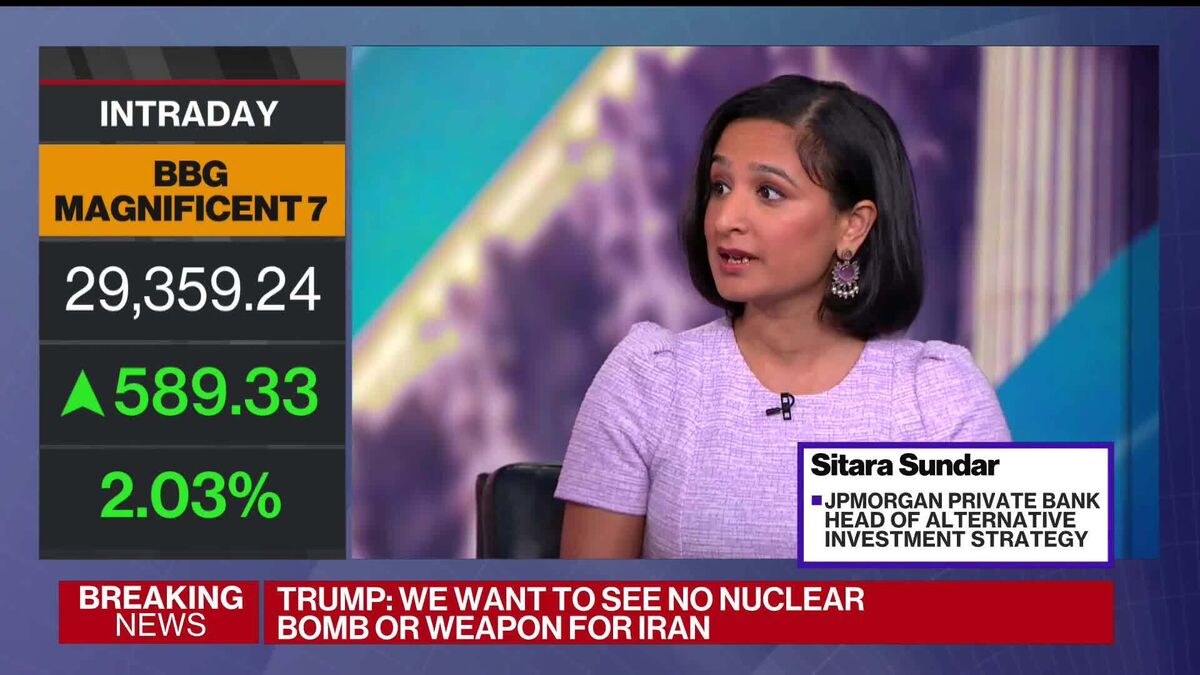
Focus Fundamentals, Alternate No Longer Optional: Sundar
In a recent interview with Bloomberg, Sitara Sundar, Head of Alternative Investment Strategy at JPMorgan Private Bank, articulated a pivotal shift in investment strategy amid ongoing market volatility. Sundar asserts that alternative investments are now essential for financial resilience, urging investors to prioritize inflation-resilient income streams and tangible assets such as real estate and infrastructure. This perspective comes at a time when traditional markets are facing significant turbulence, prompting a reevaluation of conventional investment wisdom.
Sundar's insights reflect a broader trend in the finance sector where investors are increasingly seeking stability amid economic uncertainty. The conversation with Bloomberg's Matt Miller and Dani Burger highlighted the pressing need for portfolios to adapt to changing market dynamics. She pointed out that traditional assets alone may no longer suffice in a landscape characterized by rising inflation rates and geopolitical tensions that can destabilize markets. Instead, she advocates for a diversified approach that integrates alternatives to bolster overall portfolio performance.
The significance of Sundar's statements lies not just in her recommendations but also in the timing. With inflation persisting and economic indicators fluctuating, the urgency for investors to reconsider their strategies is palpable. As traditional stocks and bonds face pressure, alternatives such as private equity, hedge funds, and commodities are gaining traction. This shift could redefine investment paradigms, pushing more investors to explore avenues previously deemed too risky or unconventional.
Moreover, Sundar's emphasis on real assets underscores a growing recognition of their potential to serve as a hedge against inflation. Investments in infrastructure and real estate not only provide income but also offer intrinsic value that can withstand economic downturns. This is particularly relevant as governments worldwide ramp up infrastructure spending to stimulate economies, creating opportunities for savvy investors to capitalize on these trends.
Looking ahead, the implications of Sundar's insights extend beyond immediate investment strategies. As more investors pivot toward alternatives, we may see a structural change in how capital flows within markets. This could lead to increased demand for alternative funds and a shift in regulatory focus, as financial institutions adapt to accommodate this evolving landscape. The conversation around alternatives may also inspire a new wave of innovation in investment products designed to meet the needs of a more diverse investor base.
### Key Takeaways:
- Key Fact: Sitara Sundar emphasizes that alternatives are now essential given ongoing market volatility.
- What Changed: Investors are moving from traditional assets to alternatives like real estate and infrastructure for better inflation resilience.
- What to Watch: Keep an eye on the performance of alternative investments over the next 24 hours as market reactions unfold.
- Practical Implication: Investors should consider reallocating portions of their portfolios to include real assets and alternative income streams.
- Broader Trend: The shift towards alternatives signals a potential evolution in investment strategies that prioritize stability and resilience in uncertain economic times.
Original source: Bloomberg
How this was produced: AI-assisted synthesis from cited source, filtered for duplication and low-value rewrites by TxtFeed quality rules.


Comments
No comments yet. Be the first to share your thoughts.