### Title: Tensions Rise as Trump Claims Iran is "Begging to Make a Deal"
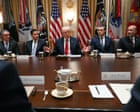
In a significant escalation of rhetoric, U.S. President Donald Trump recently stated during a cabinet meeting that Iran is "begging to make a deal," a claim that comes amid heightened tensions in the Middle East. This declaration not only underscores the volatile state of U.S.-Iran relations but also signals a potential pivot in diplomatic strategy, as the Trump administration grapples with complex geopolitical dynamics involving both allies and adversaries.
The context of this statement lies in a backdrop of ongoing military buildups and a series of confrontational exchanges between the U.S. and Iran. Recent reports indicate that Iran has taken a firm stance regarding the Strait of Hormuz, a critical maritime route for global oil shipments. According to the Yonhap News Agency, Iranian envoy Saeed Khuzechi stated that South Korean vessels can only transit through the strait after coordinating with Tehran, raising concerns about freedom of navigation in this vital chokepoint. This move further complicates the already tense situation, as it illustrates Iran's willingness to assert control over regional waterways.
The implications of Trump's remarks extend beyond just words; they reflect a broader strategy of leveraging diplomatic overtures while simultaneously maintaining a military posture in the region. The juxtaposition of peace talks with military readiness raises questions about the effectiveness of negotiations when backed by threats. As the U.S. continues to bolster its military presence in the Persian Gulf, experts warn that such a dual approach may lead to miscalculations and unintended escalations, potentially jeopardizing any chance for a peaceful resolution.
This moment is critical not only for U.S.-Iran relations but also for the broader geopolitical landscape. Allies such as NATO and the UK are also caught in the crossfire, as Trump directed barbs towards these nations during his meeting. With the global economy still reeling from pandemic-related disruptions, instability in oil markets due to Iranian threats could have far-reaching consequences. The situation demands close monitoring, as any misstep could lead to a broader conflict that would affect energy prices and international relations.
Analysts are drawing comparisons to previous diplomatic efforts in the region, notably the 2015 Iran nuclear deal, which sought to curb Iran's nuclear ambitions through a multilateral agreement. The current U.S. administration's approach, characterized by unilateral sanctions and military posturing, marks a stark departure from collaborative diplomacy. Experts caution that without a cohesive strategy that involves key stakeholders, the chances of achieving a lasting peace are slim.
In the coming days, it will be crucial to observe how both Iran and the U.S. respond to each other’s actions. The international community is particularly interested in whether Iran will engage in further provocations or if there will be a willingness to explore diplomatic avenues. As tensions mount, the potential for miscommunication or escalation remains high.
Key Takeaways:
- Trump claims Iran is eager for negotiations, contrasting with military buildups in the region.
- Iran's envoy has set conditions for South Korean vessels' transit through the Strait of Hormuz, emphasizing regional tensions.
- Watch for shifts in military deployments and potential diplomatic overtures from both sides in the next 24 hours.
- Readers should consider how rising oil prices and geopolitical instability may directly impact their daily lives and financial decisions.
- This situation reflects a broader trend of increasing assertiveness from Iran in regional waters, challenging international norms.
By following these developments, global readers can better understand the intricate web of international relations and the potential consequences of this ongoing crisis.
Original source: Guardian World
How this was produced: AI-assisted synthesis from cited source, filtered for duplication and low-value rewrites by TxtFeed quality rules.





Comments
No comments yet. Be the first to share your thoughts.