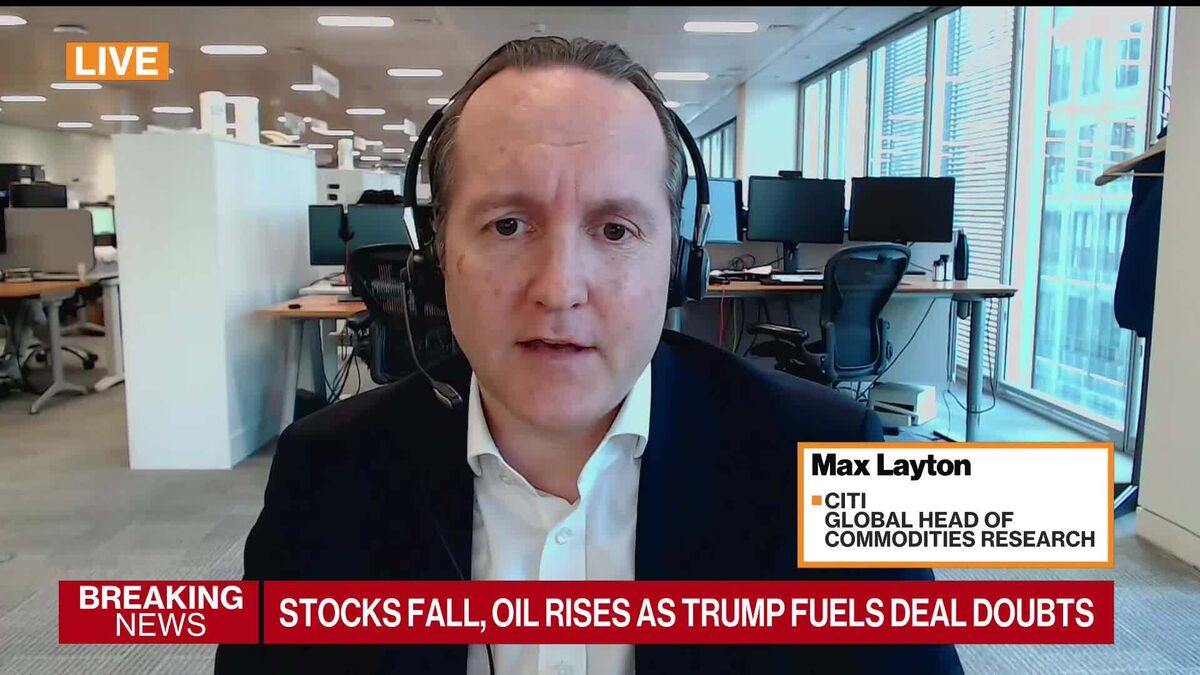
Citi's Max Layton Warns: Global Markets "Look Very Scary" Amidst Rising Oil Prices
In a striking interview on "Bloomberg Markets," Max Layton, Citi's global head of commodities research, expressed deep concern over the current state of global markets, particularly in light of rising oil prices driven by escalating tensions between the U.S. and Iran. With President Trump recently threatening intensified military action against Iran, the potential for disruption in oil supply chains has heightened fears among investors, prompting a surge in oil prices that could have widespread economic implications.
The backdrop to Layton's remarks is a complicated geopolitical landscape. The conflict between the U.S. and Iran has been simmering for years, but recent provocations have brought it to a boiling point. Oil prices, which are sensitive to geopolitical tensions, have seen a notable spike, reflecting investor anxiety about potential supply shortages. As the U.S. imposes sanctions and increases military presence in the region, the global energy market is bracing for volatility that could ripple through economies reliant on stable oil supplies.
Layton's warnings come at a crucial juncture for global markets already grappling with the aftershocks of the pandemic and supply chain disruptions. The interplay between geopolitics and energy prices is not just an economic concern; it also impacts inflation rates, consumer spending, and overall market stability. As oil prices rise, costs related to transportation and goods may increase, which can lead to a broader inflationary trend that affects everyday consumers.
The immediate significance of Layton's statements cannot be understated. Investors are now closely monitoring the situation in the Middle East, and any escalation could lead to further increases in oil prices, which would exacerbate existing economic challenges. This situation warrants attention not just from economists but from everyday individuals who may soon feel the effects of higher fuel prices at the pump and increased costs for goods and services.
Looking ahead, several key factors will be critical to watch in the coming days. The responses from both the U.S. and Iran, as well as the reactions from other oil-producing nations, will shape the trajectory of oil prices and market stability. Analysts will also be evaluating how these tensions might influence the Federal Reserve’s stance on interest rates, particularly if inflation begins to rise significantly due to increased energy costs.
In comparing this situation with past geopolitical crises, such as the Gulf War or the Arab Spring, it’s evident that oil prices can be dramatically affected by military actions and political instability. Experts suggest that the global economy is more interconnected than ever, meaning that disruptions in one region can have cascading effects worldwide. Layton's insights serve as a crucial reminder of the fragility of global markets in the face of geopolitical unrest.
Takeaways:
- Oil prices surged following President Trump’s military threats against Iran, indicating rising market volatility.
- The potential for supply chain disruptions in oil could exacerbate inflation and economic instability.
- Key developments to watch in the next 24 hours include U.S. military actions and Iranian responses.
- Consumers may face increased fuel costs and higher prices for goods as oil prices rise.
- This situation reflects a broader trend of increased geopolitical risk impacting global economic stability.
Original source: Bloomberg
How this was produced: AI-assisted synthesis from cited source, filtered for duplication and low-value rewrites by TxtFeed quality rules.






Comments
No comments yet. Be the first to share your thoughts.