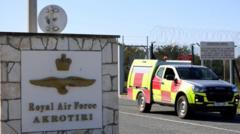
Cyprus Leader Calls for Frank Discussion on 'Colonial' UK Bases
In a significant move that could reshape Cyprus-UK relations, President Nikos Christodoulides has publicly labeled the UK's military bases on the island as a "colonial consequence." This statement comes amid rising tensions over sovereignty and territorial rights, prompting calls for a frank discussion about the future of these bases, which have been a contentious issue since Cyprus gained independence in 1960.
The two British military bases, Akrotiri and Dhekelia, were established under the 1960 Treaty of Establishment, which granted Cyprus independence from British rule but allowed the UK to retain control over these strategically important areas. They cover about 3% of the island's territory and are crucial for UK military operations, especially in the Eastern Mediterranean. However, their presence has long been a source of frustration for many Cypriots, who view them as remnants of colonialism that infringe on national sovereignty.
Christodoulides’ remarks come at a time of heightened national sentiment in Cyprus, as discussions surrounding sovereignty and territorial integrity gain traction. His statement reflects a growing consensus among Cypriots that the status quo is untenable. The call for a frank discussion signals a potential shift in diplomatic negotiations, as the Cypriot government seeks to redefine its relationship with the UK and advocate for a more equitable arrangement regarding the bases.
The implications of this discussion extend beyond Cyprus. Should the UK be compelled to reconsider its military presence, it could set a precedent for other former colonies grappling with similar colonial legacies. The evolving geopolitical landscape, especially in light of increasing tensions between NATO allies and regional adversaries, makes this a particularly timely issue. The voices of Cypriots are gaining traction, and the international community will be closely watching how the UK responds.
Experts suggest that this moment could lead to a broader reevaluation of military bases worldwide, especially in territories where local sentiment is increasingly against foreign presence. Comparisons can be drawn to other nations, such as the US in Okinawa, Japan, where local populations have long protested military bases. The Cypriot situation underscores a growing trend of nations asserting their sovereignty and demanding accountability from foreign powers.
As discussions unfold, it will be essential for readers to stay informed about the delicate balance between national sovereignty and strategic military alliances. The outcome of these discussions may have lasting effects on regional stability and international relations.
Key Takeaways:
- President Christodoulides calls UK bases on Cyprus a "colonial consequence."
- The bases cover 3% of the island and have been a point of contention since independence.
- Watch for potential diplomatic negotiations in the next 24 hours that could redefine the UK's military presence.
- This issue highlights a broader trend of nations asserting sovereignty over colonial legacies.
- Increased local sentiment against foreign military bases could influence global military policies.
Original source: BBC World
How this was produced: AI-assisted synthesis from cited source, filtered for duplication and low-value rewrites by TxtFeed quality rules.





Comments
No comments yet. Be the first to share your thoughts.