Title: Damaged Church Floor May Have Revealed the Grave of the Fourth Musketeer
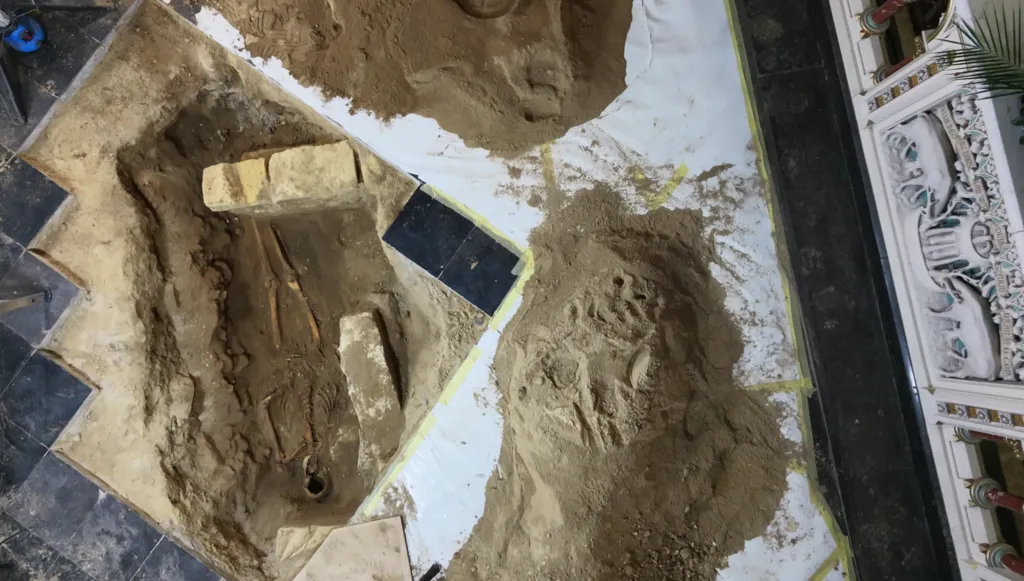
In an intriguing turn of events, a damaged church floor in France has potentially uncovered the grave of the long-rumored fourth musketeer, D'Artagnan. This discovery has ignited fascination among historians and literature enthusiasts alike, as it could provide tangible evidence linking the legendary character of Alexandre Dumas's classic novel to historical reality. The implications of this find are significant, not only for literary scholars but also for the tourism and cultural heritage sectors in France.
The church, located in the small town of Condom in southwestern France, was undergoing renovations when workers stumbled upon the disturbed soil beneath the floorboards. Initial investigations suggest that the remains could belong to Charles de Batz-Castelmore d'Armanac, the real-life figure who inspired D'Artagnan. Historical records indicate that he was buried in the vicinity, and this discovery could finally give scholars the physical evidence they have long sought.
This revelation comes at a time when interest in historical figures and their narratives is surging, driven by a wave of adaptations in film and literature that romanticize the past. The potential confirmation of D'Artagnan's existence could revitalize interest in the Musketeers' stories, leading to renewed tourism in the region as fans flock to explore the real-life setting of their favorite characters.
Furthermore, the find underscores a broader trend in archaeology where modern advancements are intersecting with historical narratives. As techniques improve, the potential for uncovering artifacts that connect literature with real-life figures grows, offering deeper insights into the cultural contexts that shaped these stories.
Experts in the field are already speculating about the implications of this discovery. If confirmed, it could not only enhance our understanding of D'Artagnan's life but also shed light on the socio-political climate of 17th-century France, providing a richer backdrop for Dumas's narrative. The intersection of fiction and history in this case serves as a reminder of how intertwined these realms can be.
As this story develops, the next 24 hours will be critical. Archaeologists and historians are expected to conduct further examinations of the site, and any additional findings could reshape our understanding of not just D'Artagnan, but the entire Musketeer legacy.
Key Takeaways:
- Initial investigations suggest the remains may belong to the real D'Artagnan, buried near the church in Condom.
- This find could significantly boost literary tourism in France, linking history with popular culture.
- Watch for upcoming archaeological reports that may confirm or challenge initial findings.
- Readers interested in history and literature should consider exploring the site, as it may become a new cultural landmark.
- This discovery reflects a growing trend in archaeology where literary histories are becoming increasingly tangible.
Original source: Ars Technica
How this was produced: AI-assisted synthesis from cited source, filtered for duplication and low-value rewrites by TxtFeed quality rules.




Comments
No comments yet. Be the first to share your thoughts.