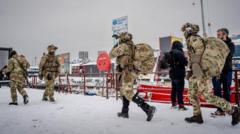
Denmark's Contingency Plan: A Cold War Echo Amid Modern Tensions
In a surprising revelation, Denmark's public broadcaster has reported that during the height of geopolitical tensions in 2019, Denmark devised a contingency plan to destroy runways in Greenland if the United States attempted to seize control of the territory. This plan emerged in the context of escalating fears that the U.S. might engage militarily in Greenland, particularly amidst its operations aimed at destabilizing Venezuela's leadership. The significance of this strategy underscores the complex interplay between national sovereignty and global power dynamics.
The backdrop for this emergency protocol is rooted in the historical significance of Greenland, which has long been a strategic location due to its vast natural resources and proximity to the Arctic. The U.S. has maintained a military presence there, notably through Thule Air Base, which has been pivotal in monitoring potential threats from Russia and China. Amidst the U.S. operations in Venezuela, Danish officials feared that such aggressive actions could prompt a similar approach toward Greenland, leading to a potential military engagement that could disrupt the delicate balance in the Arctic region.
Why does this matter now? As global tensions escalate, particularly with Russia's renewed assertiveness in the Arctic and China's growing interest in Arctic shipping routes, Denmark's plans reveal underlying anxieties about the changing security landscape. The revelations come at a time when the Arctic is becoming increasingly contested, with multiple nations vying for influence over its resources and strategic waterways. This situation raises questions about the future of international agreements and collaborations in the region, highlighting the need for transparent communication between allied nations.
Experts suggest that this incident may serve as a wake-up call for NATO allies. As military posturing increases, the potential for miscalculations grows. The Danish plan to destroy its own infrastructure could be seen as a drastic measure, reflecting a deep-seated fear of losing sovereignty. Comparatively, during the Cold War, we saw similar contingency plans where nations prepared for the worst-case scenarios, showcasing how history can repeat itself in the face of modern geopolitical strains.
In the next 24 hours, attention will likely turn to how Denmark and the U.S. will respond to these revelations. Will there be official statements or reassurances aimed at calming fears? Moreover, analysts will be watching for any shifts in military readiness or diplomatic engagements in the Arctic region. As nations seek to assert their influence, the potential for misunderstandings and escalations remains high.
### Key Takeaways:
- Key Fact: Denmark had a plan to destroy Greenland's runways to prevent U.S. takeover amidst fears of military action, highlighting Cold War-era anxieties.
- What Changed: This disclosure marks a shift from perceived cooperative relations to a more precarious security environment in the Arctic.
- What to Watch: Monitor U.S. and Danish responses to these revelations and any shifts in military readiness in the Arctic.
- Practical Implication: For businesses and individuals with interests in the Arctic, understanding geopolitical tensions is crucial for navigating future investments and operations.
- Related Trend: Increasing militarization and territorial claims in the Arctic, as nations reassess their strategic priorities and alliances.
The discussion around Denmark's contingency plan is not merely historical; it serves as a crucial reminder of the complexities of international relations and the ongoing significance of territorial sovereignty in a rapidly changing world.
Original source: BBC World
How this was produced: AI-assisted synthesis from cited source, filtered for duplication and low-value rewrites by TxtFeed quality rules.






Comments
No comments yet. Be the first to share your thoughts.