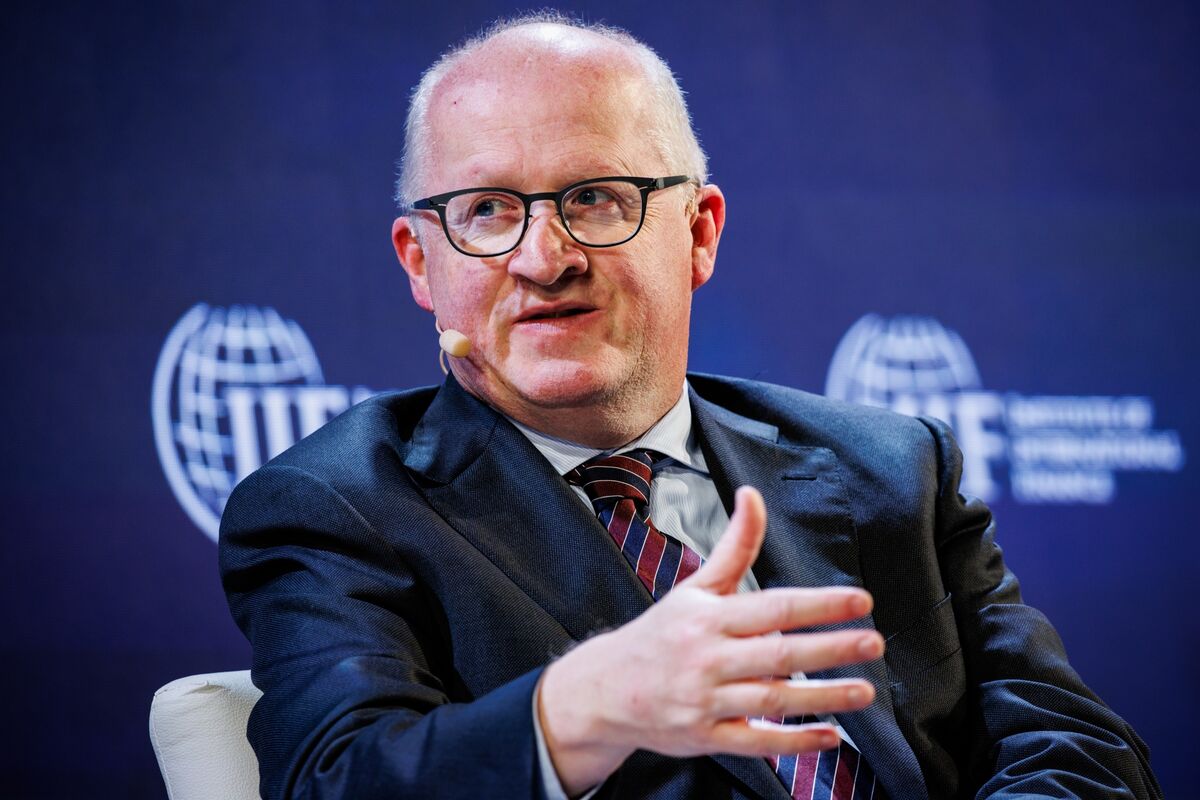
Title: ECB Chief Economist Calls for Urgent Action on EU Savings Union Amid AI Landscape
In a significant statement, European Central Bank Chief Economist Philip Lane emphasized that Europe’s heavy reliance on bank-based funding is hindering the continent's ability to fully harness the potential of innovations like artificial intelligence. Lane's remarks come at a time when the EU is grappling with economic recovery post-pandemic, and the need for a more resilient financial framework has never been more pressing.
The context behind Lane's comments stems from ongoing discussions within the EU about the need for a more integrated financial system. Currently, European economies are predominantly reliant on banks for funding, which limits access to capital for startups and innovative tech companies. This lag in financial diversification could prevent Europe from keeping pace with global competitors, particularly in sectors driven by rapid technological advancements. Lane's call to action highlights the urgency of completing the EU's savings union, aimed at creating a more robust capital market that can support innovation.
Lane’s assertions come against the backdrop of the EU's broader economic strategies, which have been increasingly focused on digital transformation. As countries like the U.S. and China invest heavily in tech-driven economic models, Europe risks falling behind if it does not adapt its financial infrastructure. Lane's advocacy for the savings union is not just about improving funding mechanisms; it's about positioning Europe as a leader in the global innovation race.
The implications of Lane’s statements are profound. By fostering a more dynamic funding environment, Europe could attract more venture capital, bolster its tech ecosystem, and ultimately drive economic growth. This transition could lead to a more competitive landscape where European firms are better equipped to innovate and scale. It’s a critical moment for policymakers who must weigh the benefits of financial reform against the inertia of traditional banking systems.
Experts believe that the completion of the savings union could also have ripple effects beyond the tech sector. Increased capital flow could support a diverse range of industries, from green energy to healthcare, thus enhancing the EU’s overall economic resilience. Comparisons can be drawn to the U.S. model, where a more diverse funding landscape has spurred significant advancements in technology and innovation.
In the coming days, attention will likely shift toward the EU's response to Lane's comments, particularly regarding legislative timelines and potential reforms. Stakeholders in the financial and tech sectors will be keenly watching how policymakers plan to address these challenges and whether they will prioritize the savings union in upcoming discussions.
Key Takeaways:
- Key Fact: Lane's remarks underscore a $500 billion funding gap in the EU’s tech sector compared to the U.S.
- What Changed: The EU is now under pressure to diversify funding sources beyond traditional banking.
- What to Watch: Look for potential announcements from EU finance ministers regarding the savings union.
- Practical Implication: Tech entrepreneurs may find new funding opportunities if the savings union gains momentum.
- Related Broader Trend: A global shift towards capital market integration is reshaping how economies fund innovation.
Original source: Bloomberg
How this was produced: AI-assisted synthesis from cited source, filtered for duplication and low-value rewrites by TxtFeed quality rules.






Comments
No comments yet. Be the first to share your thoughts.