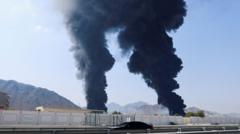
Iran Strikes Key UAE Oil Port and Dubai Airport: A New Chapter in Regional Tensions
In a bold escalation of regional tensions, Iran launched missile strikes targeting the vital oil port of Fujairah and Dubai International Airport, two critical nodes in the global oil supply chain. This unprecedented action underscores the fragility of energy routes in the Middle East, particularly as the Strait of Hormuz remains a focal point for international shipping. The immediate significance of this event reverberates through global markets, with oil prices likely to react sharply in the coming days.
Fujairah, strategically located outside the Strait of Hormuz, serves as a key oil storage and shipping hub, allowing tankers to bypass the heavily monitored strait. This facility is crucial for maintaining the flow of oil from the Gulf to global markets. The strikes not only threaten the physical infrastructure but also send a stark message regarding Iran’s willingness to project power and disrupt international trade. Reports indicate that the attacks caused significant damage, raising concerns about the safety of maritime routes in the region.
The backdrop to this escalation involves a protracted history of tensions between Iran and the UAE, compounded by broader geopolitical rivalries. Iran's actions come amidst heightened U.S.-Iran tensions and ongoing conflicts in the region, including proxy wars in Yemen and Syria. The strikes may be seen as a calculated move to assert dominance and retaliate against perceived encroachments by neighboring nations and their allies. As the UAE has strengthened ties with Western nations, particularly the U.S., Iran’s military posturing serves as a warning against further alignment.
Why does this matter now? The timing is critical as global energy markets are already strained due to various factors, including the ongoing effects of the pandemic and geopolitical uncertainties. The potential for further escalation could lead to a significant spike in oil prices, impacting economies worldwide. Investors and governments alike are closely monitoring the situation as any sustained disruption could have cascading effects on global energy supplies and economic stability.
Experts are divided on the implications of these strikes. Some analysts argue that Iran's actions could provoke a robust military response from the UAE and its allies, potentially leading to a broader conflict that draws in regional powers. Others suggest that Iran may be testing the waters for negotiations, using this incident to leverage its position in future diplomatic discussions. Comparisons are being drawn to past incidents in the Gulf, such as the attacks on Saudi oil facilities in 2019, which similarly sent shockwaves through global markets and prompted international condemnation.
Key Takeaways:
- Key Fact: Fujairah is vital for oil transport; around 20% of global oil passes through the Strait of Hormuz.
- What Changed: The recent strikes represent a dramatic shift from indirect confrontations to direct military action.
- What to Watch: Monitor global oil prices and any military responses from the UAE and allied forces in the next 24 hours.
- Practical Implication: Increased oil prices could affect fuel costs and inflation rates globally, impacting consumers.
- Related Trend: Growing military posturing in the Middle East highlights the ongoing volatility in energy markets and regional security dynamics.
As this situation develops, the interplay between military action and diplomatic negotiations will be crucial in determining the future of regional stability and global energy security.
Original source: BBC World
How this was produced: AI-assisted synthesis from cited source, filtered for duplication and low-value rewrites by TxtFeed quality rules.



Comments
No comments yet. Be the first to share your thoughts.