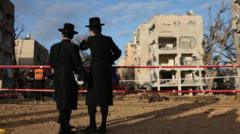
### Iranian Missiles Injure 160 in Towns Near Israeli Nuclear Site: A Desperate Breach of Security
In a shocking escalation of regional tensions, 160 individuals have been injured following a missile strike attributed to Iranian forces targeting towns near Israel's nuclear facility. This incident not only raises alarms over the efficacy of Israel's renowned air defense systems but also signals a significant shift in military aggressiveness within the Middle East.
The missile strikes occurred late Tuesday evening, with initial reports indicating that several projectiles were launched from Iranian territory, piercing through Israel's multi-layered defense network designed to intercept such threats. Local authorities in the affected areas are scrambling to assess the damage and provide medical assistance to those injured. This breach raises urgent questions about the vulnerability of Israeli infrastructure, particularly in light of its historical stance as a nuclear power in a volatile region.
To understand the gravity of this situation, it's essential to consider the broader context of Israeli-Iranian relations. Tensions have been simmering for years, fueled by Iran's nuclear ambitions and its support for militant groups in the region. The recent missile attack represents a dramatic escalation, as it not only targets civilian areas but also challenges Israel's long-held perception of invulnerability. Analysts suggest that this could embolden further Iranian military actions or proxy engagements against Israel, potentially leading to a wider conflict.
The implications of this incident extend beyond immediate military concerns. For Israel, it presents a critical moment to reassess its defense strategies and international alliances. The effectiveness of its Iron Dome system, which has historically intercepted the majority of incoming threats, is now under scrutiny. Additionally, the attack may influence diplomatic negotiations and military posturing between Iran and other regional players, such as Saudi Arabia and the United States.
Experts are divided on the potential fallout. Some argue that this could lead to a hardening of Israel's stance towards Iran, possibly resulting in preemptive strikes or intensified military operations. Others believe that this incident may push both nations toward a more cautious approach, as the risks of escalation grow. Comparisons have been drawn to the 2006 Lebanon War, where miscalculations and retaliatory strikes led to a prolonged conflict. The current situation is a reminder of how quickly tensions can spiral out of control in the region.
As the world watches closely, several key developments are anticipated in the coming days. Military analysts predict increased Israeli air patrols and potential retaliatory strikes against Iranian assets. Furthermore, this incident may prompt discussions among global powers about the need for renewed diplomatic efforts to stabilize the region.
- Key Fact: 160 individuals were injured in the missile strikes on Israeli towns, raising serious security concerns.
- What Changed: This incident marks a significant breach of Israel's air defense capabilities, which have traditionally been effective at intercepting threats.
- What to Watch: Monitor Israeli military responses and potential retaliatory actions in the next 24 hours.
- Practical Implication: Citizens in the region should stay informed about emergency protocols and potential escalations in military activity.
- Related Broader Trend: This incident reflects a growing trend of aggressive military posturing among nations in the Middle East, particularly between Israel and Iran.
In the wake of this attack, the dynamics of Middle Eastern geopolitics are shifting, and the repercussions are likely to be felt far beyond the immediate region.
Original source: BBC World
How this was produced: AI-assisted synthesis from cited source, filtered for duplication and low-value rewrites by TxtFeed quality rules.





Comments
No comments yet. Be the first to share your thoughts.