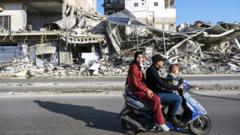
Israel Announces Control of Buffer Zone in Southern Lebanon: A New Phase in Regional Tensions
In a significant escalation of the ongoing conflict, Israel's Defence Minister has declared that the country will establish a large buffer zone in southern Lebanon, effectively preventing thousands of displaced Lebanese residents from returning to their homes until northern Israel is deemed secure. This announcement comes in the wake of increased hostilities and has immediate ramifications for both Israeli and Lebanese civilians, particularly those who have already suffered from the conflict's toll.
The decision to create this buffer zone follows a series of violent exchanges between Israeli forces and Hezbollah militants, which have intensified in recent weeks. The Israeli government cites the need for enhanced security measures to protect its northern border. Reports indicate that during recent clashes, several Israeli soldiers were injured, and retaliatory airstrikes targeted Hezbollah positions in Lebanon. The Defence Minister's statement underscores Israel's commitment to maintaining a robust defense posture amid these rising tensions.
This move has profound implications not only for the displaced Lebanese population but also for the broader geopolitical landscape in the region. By asserting control over a buffer zone, Israel is signaling its willingness to take unilateral measures to ensure its security, potentially leading to further destabilization of Lebanon. The international community, already concerned about the humanitarian situation, is likely to scrutinize Israel's actions closely, as they could exacerbate the plight of civilians caught in the crossfire.
The ramifications of this decision extend beyond immediate military concerns. It raises questions about the future of Lebanon-Israel relations, which have been fraught with tension for decades. Analysts suggest that this could lead to a deeper entrenchment of divisions, with Hezbollah likely to respond aggressively to any perceived encroachment on Lebanese sovereignty. Moreover, the potential for increased military engagement could draw in regional powers, complicating an already volatile situation.
Comparisons can be made to previous conflicts in the region, such as the 2006 Lebanon War, where similar tactics were employed by Israel. Experts argue that while a buffer zone may offer short-term security benefits, it could lead to long-term instability and increased hostilities. The economic fallout from prolonged conflict could be severe for both nations, as Lebanon grapples with a deepening economic crisis and Israel faces the potential for international condemnation.
Key Takeaways:
- Israel plans to establish a large buffer zone in southern Lebanon, restricting the return of displaced residents until northern Israel is considered safe.
- Thousands of Lebanese civilians will be affected, with security concerns cited as the primary rationale for this decision.
- Watch for potential escalations in military engagements as Hezbollah may retaliate against perceived Israeli encroachments.
- For readers, this situation underscores the importance of staying informed about geopolitical developments, particularly in relation to humanitarian crises.
- The broader trend indicates a shift towards unilateral military strategies by states in conflict zones, potentially leading to increased regional instability.
Original source: BBC World
How this was produced: AI-assisted synthesis from cited source, filtered for duplication and low-value rewrites by TxtFeed quality rules.






Comments
No comments yet. Be the first to share your thoughts.