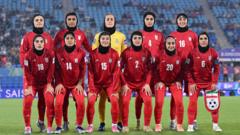
Title: Shift in Iran Women’s Football Delegation: Asylum Seekers Opt for Homecoming
In a surprising turn of events, four out of seven members of the Iranian women’s football delegation, who initially sought asylum in Australia, have decided to return to Iran. This decision comes shortly after the team’s participation in the AFC Women’s Asian Cup, where they aimed to showcase their talent and resilience amidst a backdrop of political unrest. The immediate significance of this shift lies in the complex interplay of personal safety, national loyalty, and the broader implications for women's rights in Iran.
The delegation had originally made headlines when they announced their intention to remain in Australia, seeking refuge from a regime known for its oppressive stance towards women, particularly in sports. Their decision to stay was fueled by fears of persecution upon their return, especially given the recent crackdown on dissent and the ongoing protests against the Iranian government. However, the change of heart among the four players raises questions about the pressures they faced, both from their families and the Iranian authorities, which may have influenced their decision to come back.
This development matters now more than ever as it highlights the precarious balance between personal aspirations and national identity. The players’ return could either be seen as a courageous act of loyalty or a capitulation to external pressures, illustrating the complex realities faced by athletes under authoritarian regimes. Moreover, it underscores the challenges women in Iran continue to face in pursuing sports and personal freedoms, especially in the wake of the recent protests that have sought to challenge the status quo.
The implications extend beyond the immediate situation of these athletes. Their return could discourage other potential asylum seekers who might be considering similar paths, particularly in the context of rising authoritarianism globally. Additionally, the contrasting decisions within the delegation can serve as a microcosm of the broader societal struggles in Iran, where individual desires often clash with collective societal norms and expectations.
Experts suggest that this shift may also reflect the evolving landscape of women’s rights in Iran, which has been under intense scrutiny both domestically and internationally. The return of these players may resonate with other women in the country, signaling a complex negotiation between hope and the harsh realities of life under a restrictive regime. The decision could also impact the visibility of women's sports in Iran, potentially leading to increased support or backlash in the wake of their high-profile experiences abroad.
As the world continues to watch, the next 24 hours will be pivotal. Observers will be keen to see how the Iranian government reacts to this development, especially in light of the ongoing protests and calls for greater freedoms. The players’ return could spark further discussions around the safety of women athletes in Iran and the international community's role in advocating for their rights.
Key Takeaways:
- Four out of seven Iranian women football players have opted to return to Iran after initially seeking asylum in Australia.
- The change reflects the immense pressure from families and authorities, highlighting the difficult choices faced by athletes in oppressive regimes.
- Watch for potential reactions from the Iranian government and implications for women’s rights in sports in the coming days.
- This situation underscores the ongoing struggle for personal freedom among women in Iran, potentially impacting future athletes' decisions.
- The incident ties into a broader trend of athletes navigating political climates, balancing personal safety with national pride.
Original source: BBC World
How this was produced: AI-assisted synthesis from cited source, filtered for duplication and low-value rewrites by TxtFeed quality rules.





Comments
No comments yet. Be the first to share your thoughts.