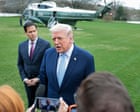
### Trump Advocates for Voter ID Act Amidst Military Deployment to the Middle East
In a notable turn of events, former President Donald Trump has voiced strong support for a strict voter ID act, claiming it should be an "easy pass" for voters. However, he emphasized the necessity of garnering Democrat votes for the measure to succeed. This statement comes at a time when the political landscape is charged with tensions surrounding electoral integrity, and it coincides with significant U.S. military movements in the Middle East, where additional troops are being deployed.
Trump's comments on voter ID reflect a broader Republican strategy aimed at tightening voting regulations, which party leaders argue are essential for preventing fraud. The former president's insistence on bipartisan support for the act underscores the complexities of passing legislation in a deeply divided Congress. This push for voter ID legislation is not new; it has been a longstanding point of contention, with supporters claiming it fosters accountability and opponents arguing that it disenfranchises eligible voters, particularly minorities.
The timing of these remarks is crucial. With midterm elections approaching, the debate over voting rights and electoral integrity is heating up. The push for stricter voter ID laws is likely to resonate with Trump's base, but it could also alienate moderate voters who are concerned about access to the polls. As the military prepares to increase its presence in the Middle East, the implications of domestic policy debates are amplified, drawing attention to how these issues intersect.
The deployment of thousands of additional marines and sailors to the Middle East, led by the USS Boxer, is also significant. This military escalation signals a potential shift in U.S. foreign policy, particularly in response to rising tensions in the region. As Trump navigates these dual narratives—voter ID and military readiness—his influence on both domestic and foreign fronts becomes increasingly evident.
Analysts suggest that Trump's call for Democrat collaboration on voter ID might be a strategic move to position himself as a uniter, despite his history of polarizing rhetoric. Comparatively, this mirrors past efforts by politicians to bridge divides on contentious issues, albeit with varying degrees of success. Experts warn that without genuine bipartisan engagement, any legislation may falter, exacerbating the partisan divide.
As we look ahead, the coming days will be pivotal. Observers will be keenly watching how Democrats respond to Trump's call for collaboration on voter ID legislation, especially amid the backdrop of military developments. The intersection of these issues may influence public perception and voter turnout in the upcoming elections.
- Key Fact: Trump claims the strict voter ID act should be an "easy pass" but requires bipartisan support to succeed.
- What Changed: Trump's focus on voter ID legislation has intensified as midterm elections approach, highlighting a renewed push for electoral reform.
- What to Watch: Monitor Democratic responses to Trump's voter ID advocacy in the next 24 hours, particularly as military deployments unfold.
- Practical Implication: Voters should stay informed about potential changes to voting laws that could affect accessibility and participation in the electoral process.
- Related Broader Trend: There is a growing national discourse on voting rights, with states across the U.S. considering legislation that could reshape the electoral landscape.
This analysis provides insight into how Trump's political maneuvers intersect with broader national security concerns, revealing the intricate dynamics of contemporary American governance.
Original source: Guardian World
How this was produced: AI-assisted synthesis from cited source, filtered for duplication and low-value rewrites by TxtFeed quality rules.




Comments
No comments yet. Be the first to share your thoughts.