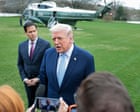
Title: Trump Pushes for Voter ID Legislation Amidst Military Deployment to Middle East
In a striking turn of events, former President Donald Trump is urging Congress to expedite the passage of the Save America Act, which aims to implement strict voter ID requirements across the United States. During a recent rally, Trump claimed that this legislation should be an "easy pass" for lawmakers, while simultaneously accusing Democrats of opposing it due to fears of exposing alleged electoral misconduct. This demand comes at a politically charged moment, as the nation grapples with ongoing debates about election integrity and access.
The Save America Act seeks to introduce stringent identification requirements for voters, a move that Trump argues is essential for ensuring fair elections. He contends that such measures would prevent fraud, a claim that has been met with skepticism from various political analysts and civil rights advocates. Trump's remarks coincide with a broader Republican push for voter ID laws, which proponents argue will enhance electoral integrity, while opponents view them as a means of disenfranchising minority voters and those without easy access to identification.
Adding complexity to the political landscape is the recent announcement regarding U.S. military deployments to the Middle East. The Pentagon has confirmed that thousands of marines and sailors, including the USS Boxer and its accompanying expeditionary unit, are being dispatched earlier than planned. This military maneuver underscores the ongoing geopolitical tensions in the region and raises questions about the alignment of domestic political agendas with international security priorities.
The convergence of these two narratives—voter ID legislation and military deployment—highlights a critical moment for American democracy and governance. As Trump rallies support for the Save America Act, the implications of this legislation extend beyond electoral processes; they touch on fundamental questions about civil rights and the role of government in regulating access to the ballot. With a midterm election approaching, the urgency of this issue is palpable, as it may shape party strategies and voter turnout.
The broader implications of Trump's push for voter ID laws reflect a significant trend in American politics: the increasing polarization surrounding election-related issues. As states grapple with varying laws and regulations, the push for stricter identification measures could lead to legal challenges, further entrenching divisions between parties. Experts suggest that this may also catalyze grassroots movements aimed at safeguarding voting rights, particularly in states where access to identification is more challenging.
Looking ahead, the next 24 hours will be critical as Congress reconvenes and debates the merits of the Save America Act. Observers will be keenly watching how lawmakers respond to Trump's call and whether any bipartisan support emerges. Additionally, the military's deployment may influence public perception of governmental priorities, especially in the context of domestic issues like voting rights.
Key Takeaways:
- Trump advocates for the Save America Act to enforce strict voter ID laws, alleging Democrats oppose it due to electoral fraud.
- The U.S. military is deploying thousands of marines to the Middle East, raising questions about domestic priorities.
- The voter ID debate highlights increasing polarization in American politics, with potential for legal challenges and grassroots activism.
- Watch for Congressional responses in the next 24 hours as lawmakers address Trump’s demands.
- This situation reflects a broader trend of heightened scrutiny on voting rights and election integrity in the U.S.
Original source: Guardian World
How this was produced: AI-assisted synthesis from cited source, filtered for duplication and low-value rewrites by TxtFeed quality rules.




Comments
No comments yet. Be the first to share your thoughts.